Beauty studied until it turns dangerous
Filing note: Filed under beauty, guilt, the closed circleLines underlined: 12
The underlined line
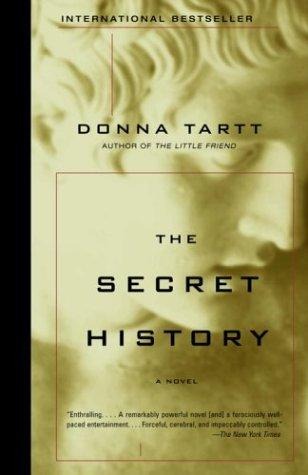
The first page of The Secret History gives away what most mysteries spend their length concealing. In a brief prologue, the narrator, Richard Papen, tells the reader that a classmate named Bunny is dead, that it happened in the mountains of Vermont, and that Richard and his friends were responsible. He mentions the season, the melting snow, the weeks that had already passed. Then the story begins at the beginning.
That opening gets underlined for its nerve. Tartt removes the question of who and replaces it with the questions of why and how it felt, and those turn out to be the more frightening ones. The reader enters the novel already knowing the destination, and every warm scene of friendship that follows is shadowed by it.
The architecture
The book is an inverted mystery, the form sometimes called a howcatchem, though here it is closer to a howcouldthey. Richard arrives at Hampden College from a drab California town, lies about his background, and talks his way into a tiny Greek class taught by a charismatic scholar, Julian Morrow. The other five students are wealthy, strange and absorbed in one another. Richard wants nothing more than to belong.
Tartt narrates from long after the events, and the retrospective voice is crucial. Richard is older, sadder and still not entirely free of the spell. He describes his friends with a lover's precision and a survivor's evasions, and the gap between what he saw then and what he admits now is where the novel's tension lives.
The book divides into two books, roughly the approach to the death and the long aftermath. That second half is unusual for the genre. Most crime novels end close to the crime; Tartt spends hundreds of pages on what follows, on paranoia, drink, sleeplessness and the slow corrosion of a group that once seemed sealed.
The theme
The novel is about beauty as a moral hazard. Julian teaches his students that the Greeks understood something modern people have forgotten: that ecstasy, terror and loss of self are part of the full human range. The students take the lesson seriously, as only gifted and insulated young people can. Tartt lets the idea sound genuinely seductive, which is the point. The book does not condemn the love of beauty; it shows how quickly that love can be used to excuse anything.
It is also about class and pretence. Richard's lies about his family are small at first, a matter of omission and borrowed polish, but they make him an ideal recruit for a group with a secret. He already knows how to live inside a story he has told about himself. The novel suggests that the instinct to belong and the instinct to cover up are closely related.
The prose carries the theme. Tartt writes long, lucid, slightly formal sentences, studded with Greek and Latin and with the furniture of old New England. The style is itself an aspiration, the voice of someone who has studied how the elegant talk and has learned to do it perfectly.
In the margin
The book is long, and the second half tests patience. The aftermath is psychologically exact but repetitive: another drinking scene, another frightened phone call, another night of circling suspicion. The slow pace is deliberate, but deliberate is not always the same as necessary.
Some of the circle are also more vivid than others. Henry and Bunny are fully drawn; the twins, Charles and Camilla, remain closer to a beautiful idea than to people. That may reflect Richard's gaze, but it thins the group at moments when the plot needs its weight.
Last note
The Secret History turns the mystery inside out and finds that the solution was never the interesting part. Knowing who did it frees the reader to watch something harder: intelligent people reasoning their way toward the unthinkable, one elegant justification at a time.
What stays on the page is Richard's longing. He wanted to be chosen, and he was. The novel is the record of what that cost, written by someone still half in love with the people who taught him the price.