A detective who cannot remember
Filing note: Filed under memory, partnership, the lie we tellLines underlined: 10
The underlined line
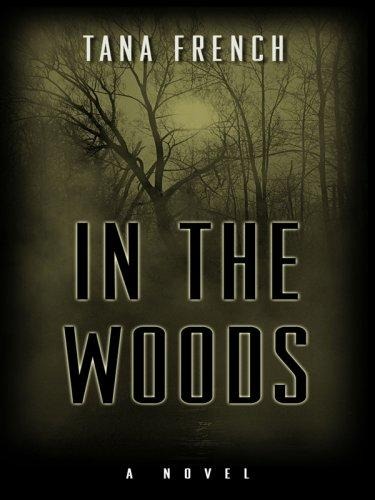
Early in In the Woods, before the case has properly opened, the narrator stops to warn the reader about himself. Rob Ryan, a detective on the Dublin Murder Squad, says he craves the truth and that he also lies. He presents both facts flatly, as items on a list. Then he goes on to tell the story anyway.
That confession gets underlined because it sets the terms of the whole novel. A detective narrator is usually the reader's guarantee: the one who sees clearly, sorts the evidence and reports back. French removes that guarantee on the first pages and dares the reader to keep trusting him. Most readers do, which is exactly what the book is counting on.
The architecture
Two timelines run through the novel. In 1984, three children went into the wood near a Dublin housing estate called Knocknaree and only one came out, found clinging to a tree with no memory of what happened. Twenty years later, a twelve-year-old girl is found dead at an archaeological dig on the same ground. The surviving child has grown up, changed his name and become a murder detective. He takes the case and tells almost no one about the connection.
French builds the book on that secret. The present investigation is a careful procedural: interviews, timelines, the grind of a squad room, the slow sifting of a family's grief. Under it runs the pull of the older mystery, which Rob both wants and fears to approach. Every scene at the wood's edge carries two charges at once.
The other structural pillar is a partnership. Cassie Maddox, Rob's partner, is the novel's best creation: quick, funny, guarded, the only person who knows his history. Their friendship is drawn with unusual precision, all shared jokes, late-night food and a private shorthand. The investigation tests it. That strain becomes, quietly, the book's real plot.
The squad room around them is drawn with equal care: the superintendent's politics, the overworked support staff, the bored rivalry between departments. French never lets the institution become wallpaper. It is a second family, with its own rules about what can be said.
The theme
The novel is about memory as something a person manages rather than possesses. Rob does not simply forget his childhood; he has built an adult self on the forgetting, and the case threatens the foundations. French writes that pressure from the inside, in prose that is lyrical when it turns to the past and clipped when it returns to the squad room. The shift in register is itself a clue to how the narrator copes.
There is also a sharp idea about self-deception and charm. Rob is likeable. He is witty, observant and good at describing other people. The reader trusts him because he is pleasant company, and the novel slowly asks whether that trust has been earned. It is a book about how easily a good storyteller can talk his way past his own failures, and how rarely anyone stops him.
Place matters too. Knocknaree is a landscape under development, an ancient site about to be paved for a motorway, and French makes the dig a quiet metaphor: the past exposed for a season, measured and labelled, then buried again under something new.
In the margin
The book is long, and the middle third sags. The procedural detail is convincing but repetitive, and some interviews circle the same ground several times. A tighter edit would have sharpened the dread rather than diluted it.
Rob's self-pity is also hard going in stretches. The novel knows he is indulging himself and uses that knowledge, but knowing does not make the indulgence shorter. Readers who tire of him will find the last hundred pages demanding.
Last note
In the Woods is a crime novel whose real subject is the narrator's account of himself. The murder gets investigated, the squad does its work, and the case moves toward its answers. Alongside it, a second inquiry runs into the man doing the telling, and that one is harder to close.
French's achievement is to make the reader complicit in the detective's blind spots. By the time the cost becomes clear, the reader has been nodding along for hundreds of pages, charmed by the very voice that warned them at the start.