Envy with impeccable manners
Filing note: Filed under envy, imposture, the borrowed lifeLines underlined: 9
The underlined line
The novel opens with Tom Ripley convinced he is being followed. A man has come out of a bar behind him on a New York street, and Tom walks faster, calculating, rehearsing what he will say if the man is a policeman. The man is not. He is the father of an old acquaintance, and he has an offer.
What gets underlined is how fully the reader is inside that first flinch. Highsmith gives no description of Tom from outside, no warning about what kind of person he is. She simply puts the reader behind his eyes, where every stranger is a threat and every conversation is a performance to be got through. By the time the reader understands the shape of that mind, they have already been thinking with it for pages.
The architecture
The setup is clean. Herbert Greenleaf, a shipbuilder, pays Tom to travel to Italy and persuade his son Dickie to come home from the coastal village of Mongibello, where Dickie paints badly and lives comfortably on family money. Tom goes, finds Dickie and his friend Marge, and discovers that he has no wish to bring anyone back.
Highsmith tells the whole story in a close third person tied to Tom. It is not first person, which would allow him to justify himself, and it is not omniscient, which would allow the novel to judge him. It sits at the exact distance of his own self-regard. The reader gets his calculations, his rehearsals and his small, precise pleasures, but never a corrective voice.
That choice turns a crime novel into something stranger. There is no detective at the centre, no investigator whose intelligence the reader is invited to share. The police appear, but at the edges. The suspense is not about whether a puzzle will be solved; it is about whether Tom will be seen, and the reader finds, uncomfortably, that they would rather he were not.
The sentences help. Highsmith's prose is plain, almost administrative: short declaratives, practical details, the price of a train ticket, the contents of a drawer. There is no lyric heightening to signal danger. Menace arrives in the same flat tone as a shopping list, which makes it far harder to brace against.
The theme
The book is about envy as an aesthetic. Tom does not just want Dickie's money. He wants his ease, his clothes, his rings, his way of entering a room, the effortless entitlement of someone who has never had to audition for anything. Highsmith writes Tom's longing through objects: a good suitcase, a well-cut jacket, the weight of a ring in a palm. Desire in this novel is always tactile.
It is also about class as a performance that can be learned. Tom is talented in the title's sense: a mimic, a forger of manners, an expert in what others expect to see. The novel suggests that identity among the moneyed is mostly surface, and that someone with enough attention can study the surface and reproduce it.
There is a quieter current too, Tom's ambiguous attraction to Dickie, which Highsmith leaves charged and unstated. Its unspoken status matters. Tom's whole existence is built on what cannot be said aloud.
In the margin
The secondary characters are thin. Marge in particular exists mostly to be resented, and Highsmith gives her little life beyond Tom's irritation with her. Since everything is filtered through his contempt, the flatness can be defended as point of view, but it still leaves the Italian chapters underpopulated.
The middle stretches can also feel mechanical, a series of near-misses and improvised fixes that repeat their rhythm. The tension holds, but the pattern becomes visible.
Last note
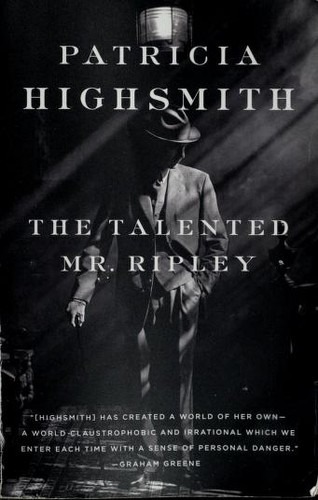
The Talented Mr. Ripley is a study in complicity. Highsmith asks nothing of the reader except attention, and attention turns out to be enough. Stay close to a mind for long enough, follow its logic and admire its competence, and its goals start to feel like the reader's own.
The novel never states its moral and never needs to. The discomfort it leaves is a recognition: that charm, taste and quick thinking can carry a person almost anywhere, and that the people watching are often eager to be persuaded.