A library built to keep secrets
Filing note: Filed under signs, heresy, the locked libraryLines underlined: 13
The underlined line
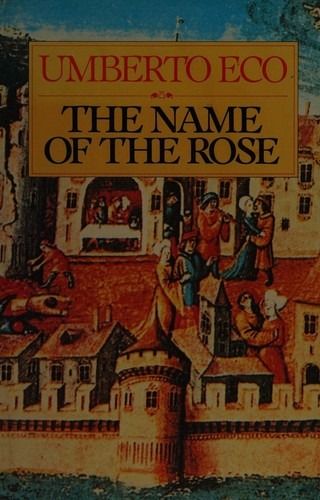
Before the abbey, before the first body, The Name of the Rose opens with a document about a document. An unnamed modern scholar explains how he came upon a French version of a Latin manuscript, lost the original, and pieced the text back together from memory and later copies. The story that follows has passed through so many hands that no one in it can be trusted to have kept every word intact.
What gets underlined is that distance. Eco places a narrative inside a copy of a translation of a recollection, and the reader is warned from the start that every source here is secondhand. It is the right preface for a detective story in which the clues are mostly texts, and in which reading badly can be fatal.
The architecture
The novel runs across seven days in a Benedictine abbey in northern Italy in 1327, and each day is divided by the canonical hours: Matins, Lauds, Prime, through to Compline. That liturgical clock gives the book its rhythm. Investigation happens in the gaps between prayers, and the bells keep interrupting thought.
The narrator is Adso of Melk, writing as an old man about the week he spent as a novice beside William of Baskerville, an English Franciscan with spectacles, a taste for logic and a name that nods openly to Sherlock Holmes. The doubled point of view is the book's finest device. Young Adso sees and does not understand; old Adso understands and can no longer quite see. Between them sits a gap the reader has to cross alone.
At the centre of the abbey stands the library, a labyrinth that only the librarian and his assistant are permitted to enter. Its floor plan is a puzzle the investigators must solve, and Eco treats it as a model of the book itself: a structure designed to store knowledge and to prevent anyone from finding it.
The famous difficulty of the first hundred pages is deliberate. Long theological disputes, inventories of marginal illuminations and debates over whether Christ owned his own purse slow the opening to a crawl. Eco later admitted he wanted the opening to work as a penance, so that only readers willing to live by the abbey's pace would stay. Those disputes are not decoration. The politics of poverty, the papacy and the Inquisition supply the pressure under which every clue has to be read.
The theme
This is a novel about signs, and about the desire to make them mean one thing. William reads the world the way a scholar reads a page: hoofprints, broken twigs, a smudge of ink on a finger. His method is inference from evidence. Ranged against him are men who read the same evidence as prophecy, the apocalypse arriving on schedule, every death a verse being fulfilled.
The mystery does not settle which reader is right so much as it measures what each kind of certainty costs. Eco's real suspect is conviction. The fanatic and the inquisitor share one trait: they already know what the text says before they open it. The detective's virtue, by contrast, is a willingness to be wrong out loud.
A note on the translation: William Weaver keeps the Latin largely untranslated, which can feel like a locked door. It is also faithful to the experience of a novice surrounded by a language of power he only half commands. The reader stands where Adso stands.
In the margin
The erudition sometimes outruns the story. There are pages, particularly the catalogues of heresies and the sermon-length exchanges between rival orders, where the novel reads more like a seminar than a thriller, and the investigation idles while the lecture finishes. A reader who comes for the murders will feel the drag.
The women of the book also get very little room. The single female figure of any weight exists mainly as an event in Adso's education. That fits the cloistered setting, but the novel does not seem especially interested in the absence it records.
Last note
The Name of the Rose is a whodunit that distrusts its own genre's promise. Detective fiction assures the reader that the world can be read, that the pattern exists and the clever mind will find it. Eco honours the pleasure of that promise, gives it a labyrinth and a corpse at every turn, and then asks what happens when the pattern a reader finds is partly the one they carried in.
The title itself refuses to decode cleanly. That is not evasion. It is the last clue, and it points back at the reader.