Labyrinths built on a single page
Filing note: Filed under libraries, mirrors, invented scholarshipLines underlined: 16
The underlined line
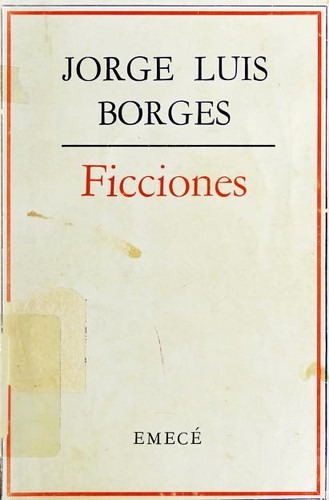
The first story in Ficciones opens by crediting a discovery to two ordinary things meeting by chance: a mirror and an encyclopedia. That pairing is the whole collection in miniature. The mirror multiplies; the encyclopedia catalogues. Between them sits a reader who trusts reference books a little too much, and Borges spends the rest of the book exploiting that trust.
What gets underlined is the tone more than any single phrase. The sentences are calm, footnoted, faintly pedantic. They cite real authors next to invented ones without changing register, so the reader stops being able to tell which is which. The prose never raises its voice to announce a marvel. It reports the marvel the way a librarian reports a misfiled volume, and that composure is what makes the strangeness stick.
The architecture
The book comes in two halves, The Garden of Forking Paths and Artifices, and almost nothing in either is a story in the conventional sense. There are book reviews of books that do not exist, an obituary-style survey of a writer's imaginary works, a detective story, a spy story, a philosophical report on a lottery that has quietly swallowed a civilisation. Borges borrows the forms of non-fiction and fills them with fiction, and the borrowed form does most of the persuading.
The structural signature is compression. A conceit another writer would stretch across a novel, a library containing every possible book, a man who cannot forget anything, a novelist who sets out to write a famous classic again word for word without copying it, gets a handful of pages. Borges explained the choice himself: it is laborious madness to compose vast books when a summary of the idea will do. The stories are those summaries, and their brevity is a kind of argument. They leave the novel unwritten and ask whether anything was lost.
The hinge is the recurring figure of the labyrinth. It appears as a literal maze, as a branching novel, as a city, as time itself. Each version is a different answer to the same question: what does it feel like to be inside a structure too large to see whole?
The theme
Ficciones is about the authority of texts. It asks what happens when a written world becomes more coherent than the real one, and it suggests, with unnerving mildness, that people will choose the coherent world. Order is seductive even when it is invented. Perhaps especially then.
The second theme is infinity, handled not as wonder but as a problem of bookkeeping. A library with every book is useless because it contains every error. A perfect memory is a curse because it cannot generalise. Borges keeps finding that the infinite, examined closely, is a form of poverty: too much detail and no meaning.
A sentence-level note on the English. The Grove Press edition gathers versions by several translators under Anthony Kerrigan's editorship, and the voices differ slightly from story to story. The dry, Latinate formality survives throughout, which matters, because that formality is where the jokes live.
In the margin
The honest reservation is temperature. These are cold pieces. Characters are rarely more than vehicles for a premise, and the emotional stakes, when they arrive, arrive as ideas about feeling rather than feeling. Readers who come to short fiction for people will find mostly propositions.
There is also a density problem. Erudition is part of the game, and Borges expects a reader willing to be uncertain about whether a cited heretic or encyclopedist ever existed. That is a pleasure for some and a wall for others. The book does not help anyone over the wall, and it is not meant to. Read too many in one sitting and the method shows its gears; the surprise of the first library becomes the routine of the fifth labyrinth.
Last note
The collection has been so influential that its inventions now feel like common property. Infinite archives, branching timelines and fictional encyclopedias that leak into reality are familiar furniture in contemporary fiction. Returning to the source is a reminder of how small and exact the originals were. Each one is a single page of thought, polished until it reflects the reader looking at it.
Ficciones is best read slowly and out of order, the way one consults a reference book. That, of course, is the trap it was built to spring.