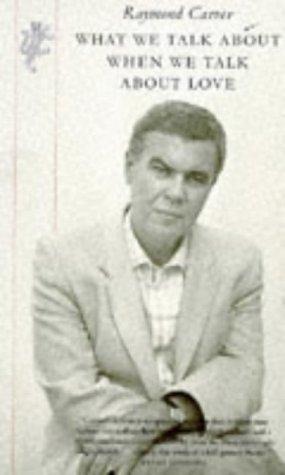
Everything said around the unsaid
Filing note: Filed under omission, kitchens, marriages coming looseLines underlined: 8
The underlined line
The collection opens on a front lawn. In Why Don't You Dance?, a man has carried the contents of his house outside and arranged it on the grass as it stood indoors: the bed, the nightstands, the record player, the kitchen table. A young couple driving by assume it is a yard sale and stop. That is the image to underline, a household turned inside out and set up in the open, with nobody explaining why.
The sentences describing it are flat and inventory-like. Carver lists the furniture the way a mover would. There is no interpretation, no backstory, no adjective doing emotional work. The reader supplies all of it, and the supplying is what makes the scene so uncomfortable. The absence of explanation is the explanation.
The architecture
There are seventeen stories, most of them short and some barely more than a few pages. Popular Mechanics is over almost before it begins. The settings repeat: kitchens, living rooms, motels, cars, the porch at night. So do the props: drinks, cigarettes, the telephone, the television left on. Characters are usually working people at the edge of something, a separation, a job lost, a drinking problem everyone has agreed not to mention.
Carver builds almost entirely from dialogue and surface action. People say short, ordinary things, often the wrong things, and the narration rarely tells the reader what they feel. The stories end abruptly, frequently at a moment that would be the midpoint of a conventional plot. The structure is a door closed slightly too early, and the reader is left standing in the hallway.
The title story is the hinge and the longest piece. Two couples sit around a kitchen table on a sunny afternoon, drinking gin and talking about what love is. One of the men, a cardiologist, does most of the talking. The light in the room slowly changes as the bottle empties, and the conversation, which began as a debate, becomes something more exposed.
The theme
This is a book about what people cannot say to each other, and about how much of a life can be conducted in avoidance. Love here is not absent; it is inarticulate. Characters reach for it with clichés, anecdotes, jokes and accusations, and the stories record the gap between the reaching and the reached.
The minimalism is the theme in structural form. Carver's people lack the vocabulary for their own lives, and the prose matches them, refusing to be more eloquent than its characters could be. The result is an unusual kind of dignity. The narration never condescends to the people it describes, because it never pretends to know more than they do about their own trouble.
There is a sentence-level discipline worth naming. Carver's paragraphs are made of short declaratives, repeated nouns and plain verbs. A reader can feel the pressure of words that were considered and left out, which is part of why these stories reread so well: the omissions keep shifting.
In the margin
The essential reservation now belongs to the book's history. The stories were heavily cut by Carver's editor, Gordon Lish, some of them by more than half, and the longer versions were later published as Beginners. The famous austerity of this collection is therefore partly an editorial creation, and readers who compare the two find a warmer, more expansive writer behind the edited one. That does not cancel the achievement of this version, but it complicates any reading that treats the style as pure authorial instinct.
There is also a narrowness of register. Seventeen stories in the same bare key can feel airless, and the abrupt endings, so striking at first, become a mannerism by the end. A few pieces seem less unresolved than unfinished.
Last note
Whatever the history of its making, this is the book that taught a generation of writers how much a story could leave out. Its influence on American short fiction is hard to overstate, and its strongest pieces still feel dangerous in their quiet: rooms where something has gone wrong and no one will name it.
Read the title story aloud. The silences between the speeches are where the story actually takes place.