An island that forgets on schedule
Filing note: Filed under forgetting, objects, quiet complianceLines underlined: 11
The underlined line
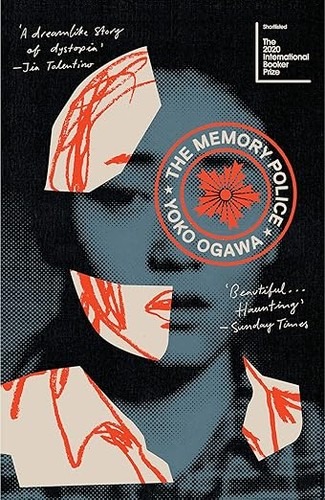
Early in The Memory Police, the narrator recalls her mother showing her a set of hidden drawers in her studio, each one holding something the island has already lost. A ribbon, a stamp, a small bottle of perfume. The child looks at them and feels almost nothing. The objects are present; the meaning has gone. That is the first thing to underline, because it sets the book's terms. Disappearance on this island is not destruction. The thing may survive. What goes is the ability to care about it, to name it, to know what it was for.
Stephen Snyder's English keeps Ogawa's sentences small and level. They describe a morning when something has vanished in the same tone they use for making tea. That evenness is the source of the dread. Nobody screams. People wake, sense that something is missing, gather up whatever remains of it and dispose of it, and go on with the day.
The architecture
The novel is narrated by a young novelist who lives alone on the island and keeps writing even as the vocabulary around her thins. Her closest company is an old man who once worked on the ferry and now lives on a decommissioned boat in the harbour. Her editor, R, is one of the rare islanders who cannot forget, and that makes him a target for the Memory Police, who enforce each disappearance and remove anyone whose memory refuses to comply.
Ogawa sets a second text inside the first. Chapters of the narrator's own novel-in-progress, about a typist and her typing instructor, interrupt the main story. The inner book is stranger and more claustrophobic than the outer one, and the two begin to mirror each other: a voice gradually silenced, a room that becomes a cage. The structure is the book's sharpest move. It shows a writer losing language while still using it, and it lets the reader watch her fiction answer what her daily life cannot say out loud.
The hinge is domestic. A hidden room, the arithmetic of food, the sound of footsteps on the stairs. The novel's tension comes less from raids than from the slow logistics of keeping someone safe.
The theme
The Memory Police thinks about how loss becomes normal. Each disappearance is small; the accumulation is total. The book refuses the heroic version of resistance. Its people adapt, and the adapting is the horror. Readers have reasonably connected it to state surveillance and to the diary of Anne Frank, which Ogawa has written about admiring, and the hidden room makes the echo plain. But the novel never turns into allegory with a single key. It works as well as a portrait of grief, of ageing, of any slow erosion a person only notices in retrospect.
The deepest idea is about words. When an object vanishes, the word for it goes hollow, and once the word is hollow, the object cannot be recovered even if it is held in the hand. Memory, here, lives in language rather than in things. A novelist is the obvious person to tell that story, and the obvious person to suffer it.
In the margin
The calm is a choice, and it costs something. Ogawa withholds the politics almost entirely. Who runs the Memory Police, how the disappearances are decided, what the rest of the world is doing: none of this is answered, and the novel insists it does not need to be. Many readers will accept that. Others will find that the vagueness lets the book stay soft where it might have been sharp, and that the islanders' passivity, however deliberate, edges toward a fable that explains too little.
The inner novel also tests patience. Its claustrophobia is the point, but a few of its chapters press the same note longer than necessary.
Last note
The book's power is cumulative and almost invisible while it works. Page by page, the reader grows used to absence, the way the islanders do. Then, at some point, the mind reaches for an ordinary word and notices how much of the world it depends on.
Ogawa first published the novel in Japan in 1994, and the English translation arrived a quarter-century later sounding unnervingly current. It is a book about forgetting that makes a reader newly careful with what is still there.