A history that will not stay past
Filing note: Filed under history, complicity, the bodyLines underlined: 11
The underlined line
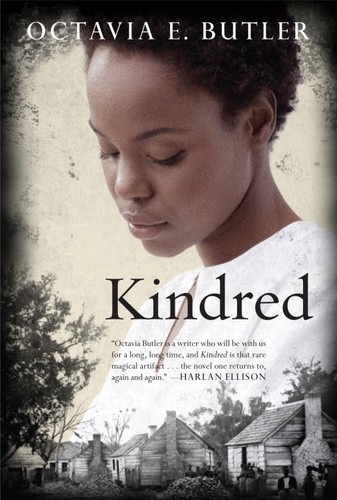
The first sentence of Kindred reports an injury. Its narrator, Dana, tells the reader in a single flat statement what her last trip home cost her body, and then the prologue moves on as if that were simply a fact to be filed. That flatness is the book's first lesson. Butler will not dramatise the violence of history with ornament. She records it, as plainly as a police report or a medical chart, and lets the plainness do the damage.
The prose throughout is direct, almost severe. Short sentences, practical observations, very little figurative language. Dana is a writer, and she narrates like one who has decided that clarity is a moral obligation. The sentences rarely tell a reader what to feel. They tell a reader exactly what happened, and in what order.
The architecture
In 1976, on her twenty-sixth birthday, Dana is unpacking books in a new house in Los Angeles with her husband, Kevin, when she grows dizzy and finds herself on a riverbank in early nineteenth-century Maryland. A small white boy is drowning. She saves him. The boy is Rufus Weylin, the son of a slaveholder, and he will keep summoning her across time whenever his life is in danger. She returns home only when her own life seems to be at risk.
Butler supplies no machine and no theory. Asked about the book, she called it a grim fantasy rather than science fiction, and the distinction matters. The device has no rules to admire. It is simply a pull, sudden and humiliating, and it puts a modern woman's body on a plantation with no protection except her wits.
The chapters are titled with blunt nouns, The River, The Fire, The Fall, and so on, each one naming the danger that triggers a crossing. The hinge comes when the visits stop being brief. Time moves faster in the past than in the present, so a few hours at home can mean years for Rufus, and Dana begins to see him grow up into the world that made him.
The theme
Kindred is about how the past survives inside the present: in families, in property, in bodies. Dana discovers that her own existence depends on Rufus surviving long enough to become her ancestor, and that tie makes simple moral distance impossible. She cannot condemn the past from the safety of 1976, because 1976 is built on it.
Butler is exact about the texture of that world: the work of a kitchen, the rules of a household, the punishments, the books that must be hidden, the small negotiations that allow a person to get through a day. None of it is backdrop. Every domestic detail is part of the machinery.
The book's hardest insight is about adaptation. Dana arrives with a modern person's confidence that she would resist, and Butler shows, carefully and without contempt, how quickly a system of terror teaches anyone to bargain with it. The novel is less interested in heroism than in what survival requires and what it erodes. Its title holds the double meaning: kinship by blood, and the unwanted likeness between people on opposite sides of power.
In the margin
Kevin is the book's thinnest figure. His presence in the past opens useful questions about a white man's ease inside that world, but Butler sketches him more than she inhabits him, and the marriage at the centre of the frame never gets the same pressure as the plantation chapters. The 1976 scenes, in general, are functional rather than full.
Some readers will also find the plainness hard going. The refusal to soften or decorate is principled, but it means the book offers few places to rest. That is clearly intended. It is still worth naming.
Last note
Published in 1979, Kindred has become one of the most widely taught American novels about slavery, and it works partly because it refuses the distance a historical novel usually allows. The reader is placed where Dana is: in the present, suddenly not.
Butler's plain style turns out to be the book's most radical choice. Without ornament to admire, there is nowhere to look except at what is being described, and nothing to soften the fact that it was real.